
Where Do You Source Your Wood?
A humorous look at where woodturners really get their wood — from roadside finds and helpful arborists to the occasional splurge on exotic hardwoods. Proof that one person’s yard waste is another’s masterpiece waiting to happen.
It’s a question I get all the time — right after “How long did that take you to make?” (The answer to that one, as always, is “I’m still not sure.”)
When people see a finished bowl or hollow form, they often assume I buy neatly cut, perfectly seasoned blanks from some exotic supplier. Sometimes, yes — but most of the time, my wood has a much more interesting origin story. Let’s just say, if there’s a chainsaw running within a half-mile radius, I probably know about it.
Found on the Side of the Road (a.k.a. Free is My Favorite Price)
I can’t tell you how many great pieces have started as roadside rescues. You’d be surprised what people toss out when a storm comes through or a tree service does a cleanup.
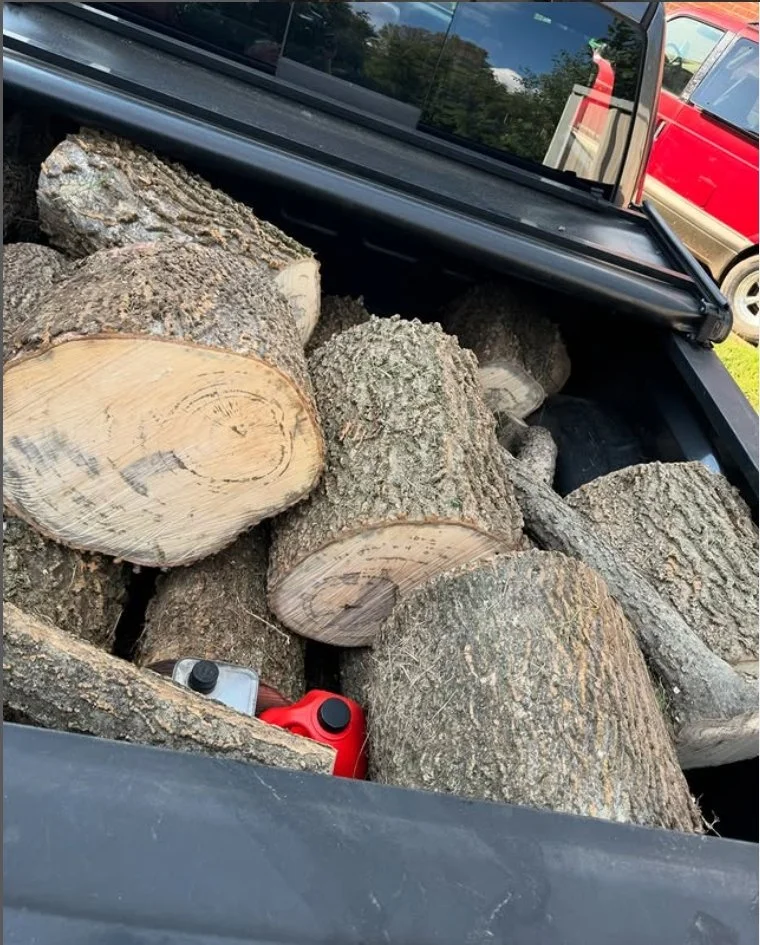
I’ve pulled over more times than I’d like to admit because a certain log just “looked promising.” It’s a strange hobby when your idea of a good find is something the trash truck was five minutes away from taking. I’ve learned to keep a small saw and a tarp in the truck — just in case inspiration strikes (or lightning does).
My neighbors have stopped asking why I come home with chunks of tree in the back of my vehicle. They just shake their heads and mutter, “He’s at it again.”
Following the Sound of Chainsaws
There’s a special kind of radar that develops after years of turning — the chainsaw frequency detector.
If I hear that familiar buzz somewhere nearby, it’s like a dinner bell for opportunity. A quick walk over and a friendly “Hey, what are you doing with that wood?” has led to some amazing finds. Most people are happy to let you take a few pieces, especially when they realize you’re going to make something beautiful (instead of just mulch).
Of course, you have to pick your moments. Running up mid-cut waving your arms isn’t the best approach.
Local Arborists and Tree Services
One of the best sources of turning wood is your local arborist or tree removal service. These folks deal with more wood in a week than I could turn in a lifetime. Once they find out you’re a woodturner, you’ll often get a call before the logs hit the chipper.
A few will even set aside interesting pieces — crotch sections, burls, or unusually figured wood — because they know they’ll be put to good use. Sometimes they even deliver, which beats chasing logs around town.
Purchasing Specialty Woods (a.k.a. The Guilty Pleasure)
As much as I love free wood, there are times when buying is the only option. Specialty woods like purpleheart, ebony, or kiln-dried dimensionals for segmented pieces don’t exactly show up in your neighbor’s firewood pile.
When I do buy, it’s usually for a specific project — something that needs the strength, color, or precision of milled lumber. I treat those purchases like fine chocolate: sparingly and with great appreciation.
Why It Matters
There’s something deeply satisfying about knowing the story behind each piece you turn. That Bradford pear bowl on the shelf? It came from a storm-damaged tree three blocks away. That natural-edge vase? It was once shading a neighbor’s driveway.
Each log carries a bit of history — and sometimes a funny story about how you found it.
So, where do I source my wood? Everywhere. From curbsides to sawmills, arborists to specialty shops — each piece begins its journey long before it hits the lathe. And if you ever hear a chainsaw in your neighborhood, don’t be surprised if I show up to say hello.