
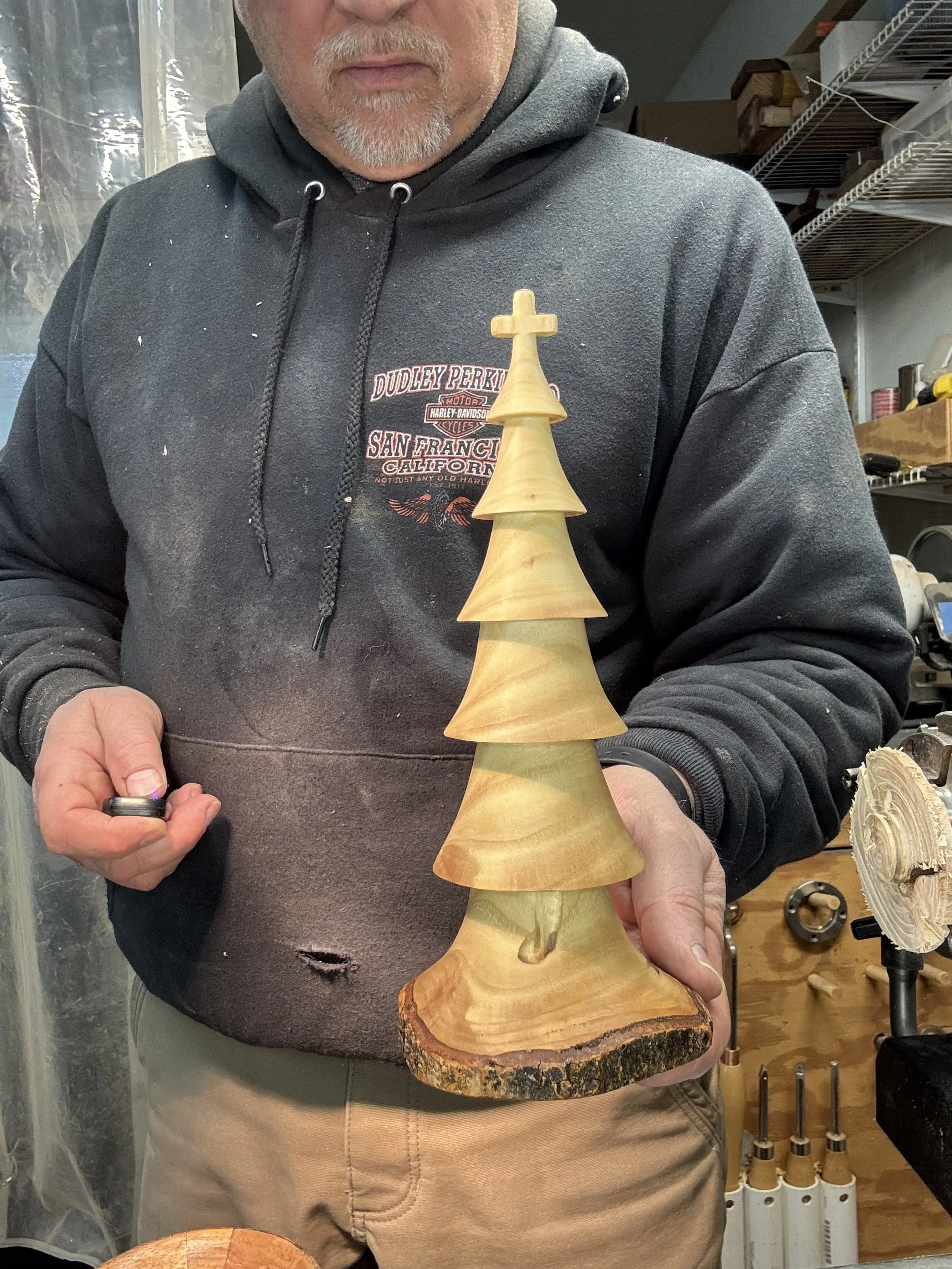
Winter Shop Survival: A Few Lessons Learned the Cold Way
A short, practical reflection on surviving winter in an unheated woodturning shop — with simple strategies for staying motivated, warm, and creatively engaged.
Winter in an unheated shop is a special kind of character builder. It teaches patience, resilience, and exactly how long you can feel your fingers before things get concerning.
Over the years, I’ve picked up a few survival strategies — none of them revolutionary, all of them effective.
First: dress for the shop, not the driveway. Layers matter. Gloves with the fingertips cut off are a rite of passage. If you can still feel the tool and the wood, you’re winning.
Second: shorten your sessions. Winter shop time doesn’t have to be all-or-nothing. Even twenty minutes at the lathe counts. Sometimes that’s enough to make progress — or at least remind yourself why you enjoy turning in the first place.
Third (and maybe most important): lower expectations. Winter isn’t always the season for ambitious projects. It’s the season for practice pieces, experiments, and “let’s see what happens” turning. Not everything has to be gallery-worthy to be worthwhile.
And finally, remember this: if you came back inside with sawdust on your sleeves and a little more warmth in your bones than when you went out, the shop did its job.
Spring will come. Until then, keep the shavings flying — even if you can see your breath while you do it.
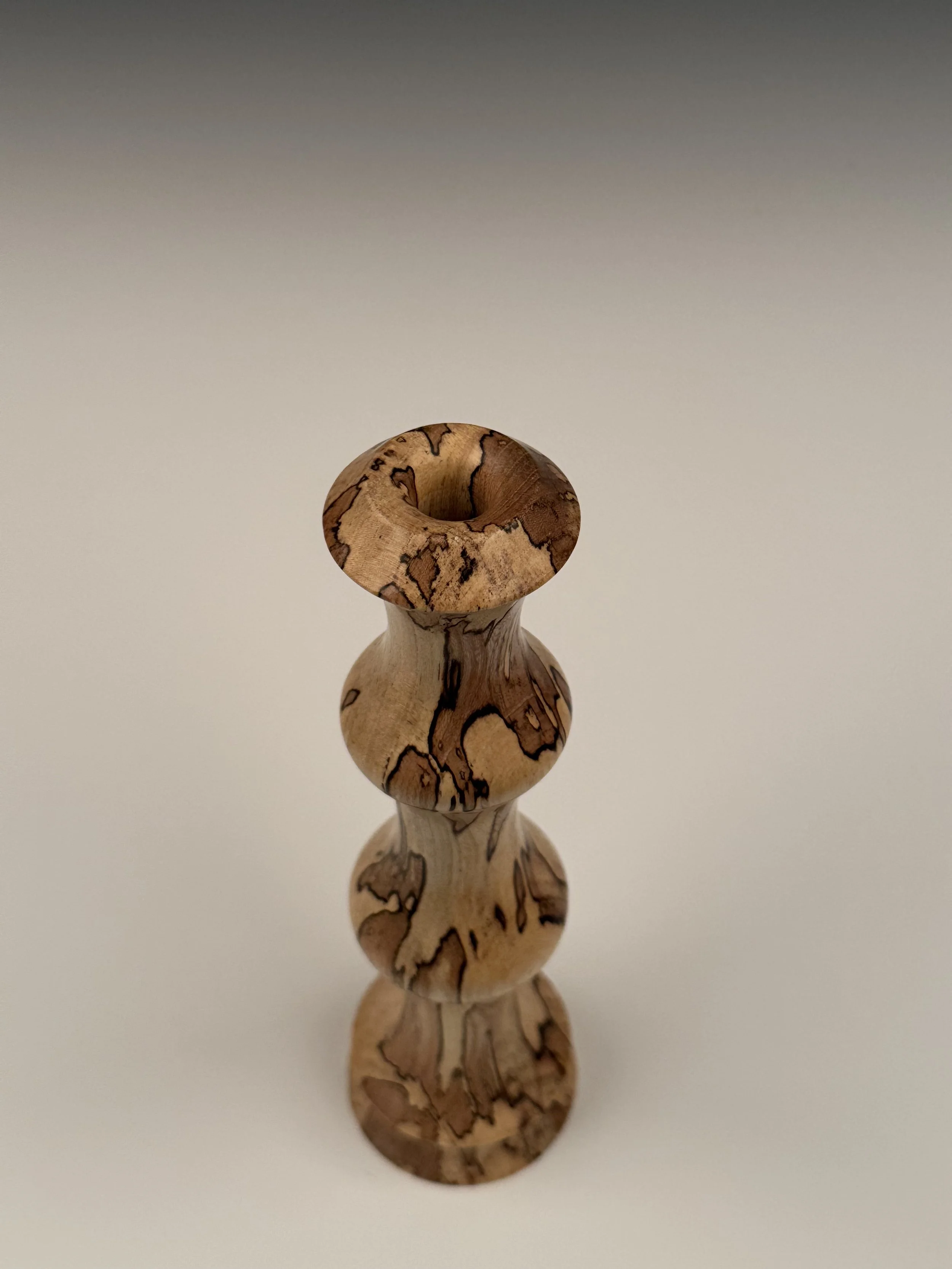
Getting Stuck: When Creativity Freezes in the Winter
A reflective and lightly humorous look at creative ruts during the cold winter months — and why sometimes the best solution is to stop waiting for inspiration and just make something.
There’s a particular kind of creative block that shows up in winter. It’s not dramatic. It doesn’t arrive with a crisis or self-doubt spirals. It just quietly settles in… right about the same time your shop hits 38 degrees and your breath starts fogging the face shield.
When there’s no heat in the shop, motivation has a way of staying indoors.
The Cold Shop Effect
In the warmer months, it’s easy to wander into the shop “just to check something” and somehow end up covered in shavings an hour later. In winter, that same shop looks less like a creative sanctuary and more like a test of personal endurance.
You start negotiating with yourself:
“I’ll go out there after one more cup of coffee.”
“Maybe tomorrow will be warmer.”
“I could sketch ideas instead… from the couch.”
Before you know it, days (or weeks) pass without turning a single piece of wood.
When Inspiration Goes Into Hibernation
The tricky part is that the lack of motivation starts to feel like a lack of creativity. You stand in the shop staring at your wood pile, waiting for an idea to announce itself. It doesn’t. The blanks just stare back — silently judging.
You convince yourself you need the right project before you start. Something meaningful. Something worthy. Something that justifies putting on three layers of clothing and gloves with the fingertips cut off.
That project never comes.
The Secret: Just Make Something
Here’s the part that took me way too long to accept: inspiration usually doesn’t show up before you start. It shows up after.
One of the best ways out of a creative rut is to lower the bar — way down. Make something small. Make something simple. Make something that doesn’t matter.
Turn a practice bowl. A spindle. A form you’ve done a hundred times before. Tell yourself it’s just an exercise. No pressure. No expectations. No one even has to see it.
Nine times out of ten, once the lathe is spinning and the shavings start flying, something shifts. Your hands remember what to do. Your brain quiets down. And suddenly, ideas start sneaking back in — usually right when your fingers are too cold to stop.
Progress Beats Perfection (Especially in January)
Not every session has to produce a masterpiece. Some days, just showing up is enough. That small act of making — even when you don’t feel inspired — keeps the creative muscles from completely freezing over.
Think of it like warming up an engine. You don’t floor it right away. You let it idle for a bit. Creativity works the same way.
A Quiet Kind of Momentum
Winter will pass. The shop will warm up. Motivation will return in its own time. But in the meantime, “just making something” keeps you connected to the craft — even on the days when inspiration is wearing a heavy coat and refusing to come outside.
That’s one of the quieter lessons woodturning teaches you: progress doesn’t always come from big ideas. Sometimes it comes from showing up, flipping the switch, and letting your hands do what they already know how to do.
This is exactly the kind of lesson I like to share in my Turning Lessons — not just how to make better pieces, but how to keep making at all. Especially when the shop is cold, the days are short, and the couch looks very inviting.
What Wood Grain Teaches You About Patience
There’s something humbling about watching the story of a tree reveal itself, layer by layer.
When you first mount a rough block of wood on the lathe, you might think you already know what it will become. But once the tool meets the surface, reality quickly sets in. The wood grain has other ideas.
Each piece of wood carries its own history — wind, weather, water, and time — all etched into its grain patterns. And as any woodturner learns, those beautiful, flowing lines are both an invitation and a warning: proceed with patience.
The Lessons Hidden in the Grain
There’s something humbling about watching the story of a tree reveal itself, layer by layer.
A knot may appear where you least expect it. A soft patch may tear out under the gouge. The darker streaks may run against the direction you planned to cut.
That’s where the lesson begins.
Woodturning teaches you that patience isn’t passive. It’s active — the steady hand, the willingness to adapt, the quiet trust that the form will emerge if you stay with it long enough.
It’s the same lesson life keeps trying to teach us. You can’t force the grain to change direction — not without splintering something important.
When the Grain Fights Back
Anyone who’s ever sanded end grain knows the feeling: you think you’re done, then the light catches a swirl that shouldn’t be there. You sigh, pick up the next grit, and start again.
And yet, that repetition — that rhythm — becomes part of the meditative beauty of craftsmanship.
Over time, you realize that imperfections aren’t flaws; they’re features that give character and depth. Much like people, the most interesting pieces are often the ones that resisted the most along the way.
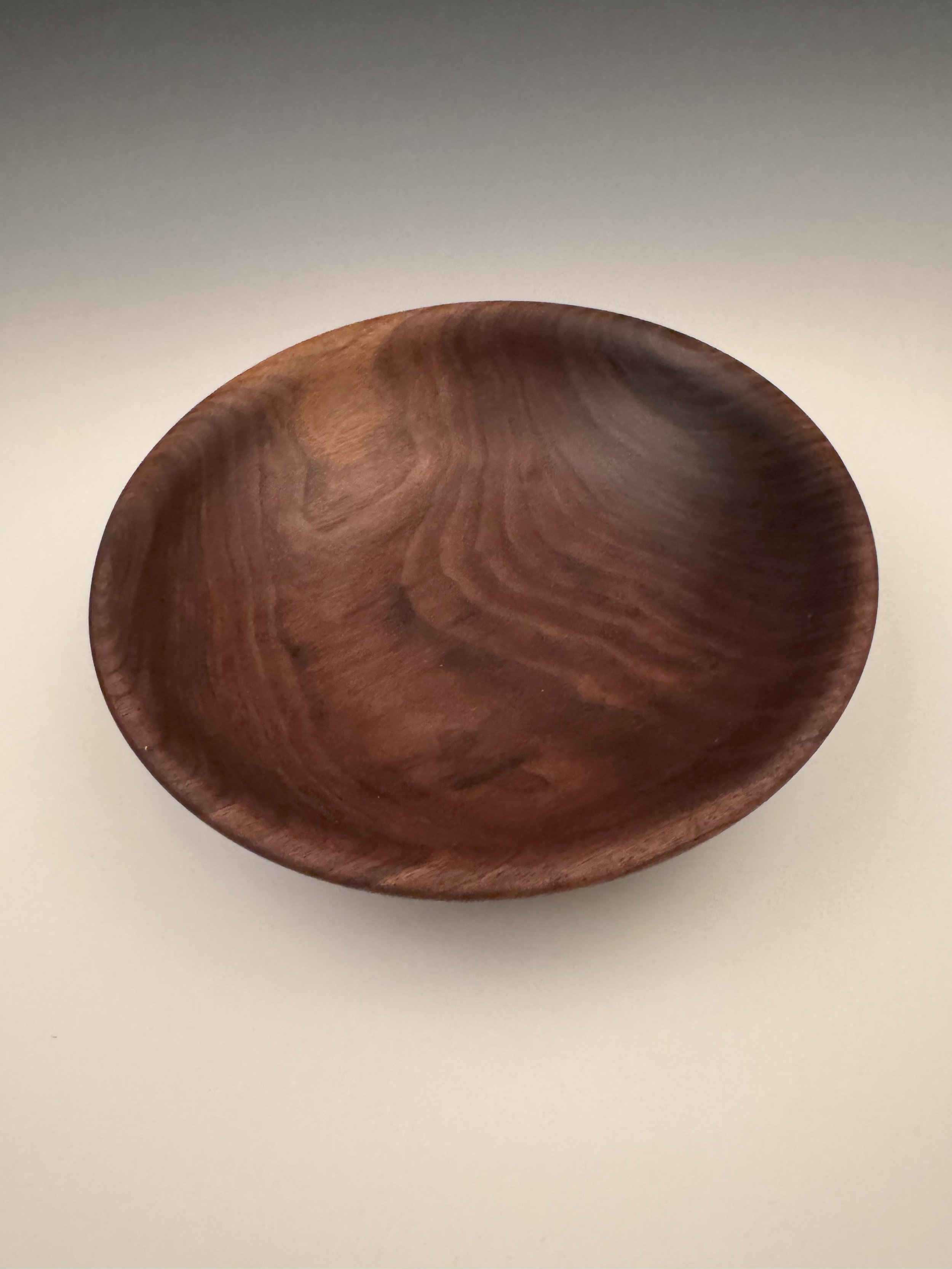
If you’d like to see an example, take a look at my Walnut Candy Bowl — a perfect example of how wild grain can shape a piece into something better than planned.
Patience in Craft, Patience in Life
Working with wood grain is a conversation between maker and material. Some days, the wood listens. Some days, it pushes back. But with time, you learn to stop trying to control the outcome and start appreciating the process itself.
And maybe that’s the real gift of craftsmanship — not the finished bowl, but the quiet, enduring patience that grows with every turn.
If you enjoy these reflections, explore more insights in my Turning for the Love blog category.